
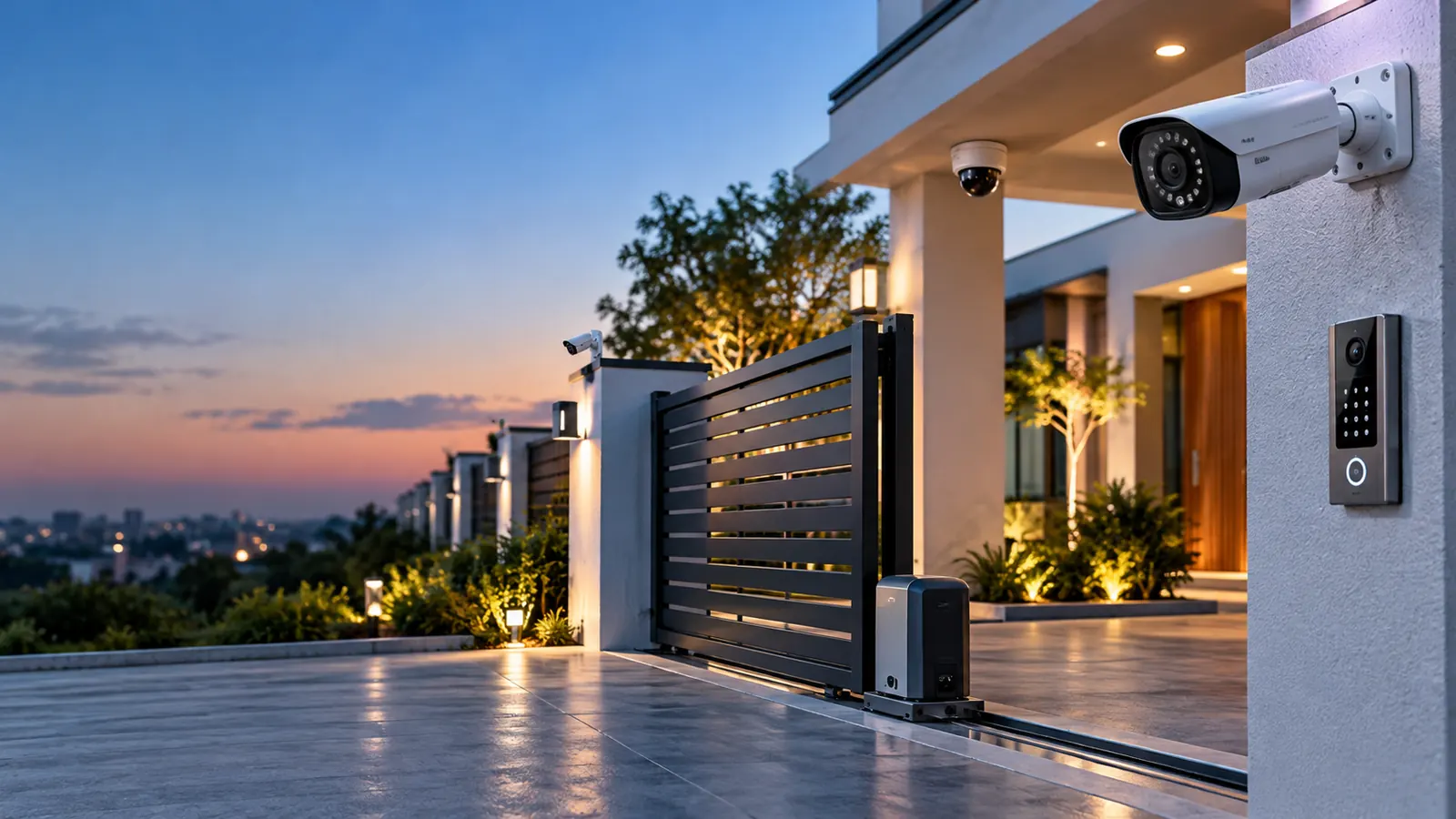
Map important areas
Mark entrances, gates, corridors and practical points of concern. Choose camera positions to reduce blind spots, while respecting neighbours and spaces where privacy is expected. The purpose should be clear for every camera.
Think about light and recording
Consider day/night lighting, weather exposure, storage duration, picture quality and the distance required to identify an event. A high-resolution camera installed at the wrong angle may still deliver poor evidence.
Protect the network
Use strong credentials, limit remote access, apply firmware updates and restrict who can view footage. Camera systems should be part of the network security plan, not an afterthought.
Agree on ongoing support
Ask how often lenses are cleaned, recordings checked, storage verified and alerts tested. A documented maintenance agreement reduces unpleasant surprises when a recording is needed.
Good surveillance balances useful visibility, privacy and dependable operation.